

For me at least, every poetry journey starts in an unexpected way. If you’re reading this after watching Extraordinary Attorney Woo on Netflix, then your journey to this spot had the same origin as mine a few months ago: the brief quote from the poem “Charcoal” by Ahn Do-Hyun that appears in Episode 12 of that show (translated into English here).
Not satisfied with just one poem, though, I decided to pursue more of his work and obtained a copy of Poems by Ahn Do-Hyun (translated into English by Brother Anthony of Taizé) from my local library.
I am anything but an expert on Korean poetry—Ahn Do-Hyun’s poems being only my second foray into this branch of Korean literature. So, I’ll keep my commentary short and focus on what other cross-cultural poetry enthusiasts might want to know.
Thoughts
Ahn Do-Hyun’s poems have many beautiful turns of phrase that still pack a poetic punch even when translated. My favorite poems include “Ground,” “If We Are Falling Snow,” and “Seaside Post Office.” They contain vivid images combining relationships, hope, and nature. While I’m tempted to share all the figurative gems and lines that I love best, I’ll restrain myself and let you discover them for yourself.
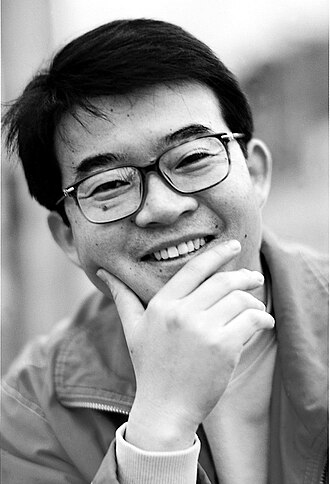
Several of the poems are thought experiments. “A Mosquito-Net Zoo” provides a humorous perspective as it compares a person behind a mosquito-net to an animal in a zoo, with the mosquitoes as the passerby looking in. And another poem explores what the world would be missing if there were no children; the closing lines are a bit obscure, but the commentary at the end helps clarify what they mean.
The overarching themes of the poems are love and nature, which may sound like a summary of every poem ever written, but Ahn Do-Hyun’s approach is unique and quietly refreshing. His poems contain and convey the very calmness of the settings they portray: the beach, the ocean, falling leaves, drifting snow, the flowering of a tree. Some of the poems are a bit sensual but tend to stay figurative for the most part, with only a few moderately graphic bits that you can skim over pretty easily.
Contents
The first half of this little book contains twenty of Ahn Do-Hyun’s poems with facing pages of the original Korean and then the English translation. The book then finishes off with a brief note from the poet, a commentary by literary critic Lee Kyungsoo that sheds light on some of the poems’ hidden meanings, and thoughts from contemporary poets from other countries. If you, like me, are intrigued by the final page of untranslated Korean before the “Poet’s Note,” I will satisfy your curiosity by sharing what I figured out with a quick translation search…the last page is just a citations page noting where the poems were originally published.
I highly recommend reading all the way to the end as I found the commentary quite interesting and helpful in further understanding the poems and the poet himself.
Conclusion
Overall, I enjoyed the poems and hope to read more of Ahn Do-Hyun’s works and other Korean poetry in the future. Their predominantly autumn and winter settings make Ahn Do-Hyun’s poems in this collection perfect for this time of year especially.
Happy reading!
Discover more from Worthwhile Words
Subscribe to get the latest posts sent to your email.

Pingback: Poems for the Winter: Poetry Collections from Joseon Korea and Communist China – Worthwhile Words